Wren Spinney School

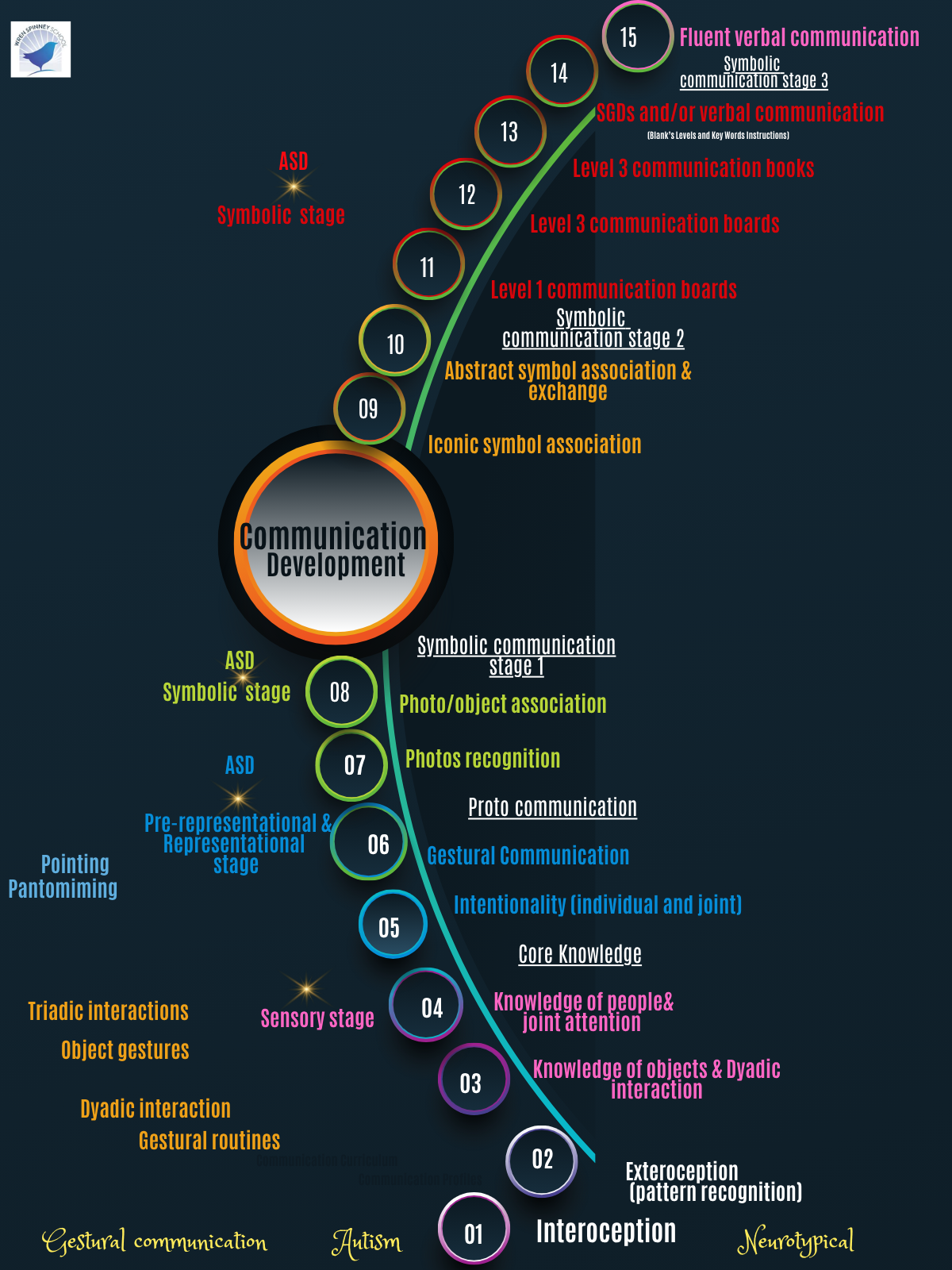
Communication Development
1️⃣ Interoception
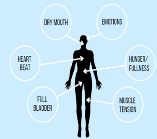
Interoception is the sense of the internal state of the body. It involves the ability to perceive and interpret signals from within the body, such as:
- Hunger
- Thirst
- Heartbeat
- The need to breathe
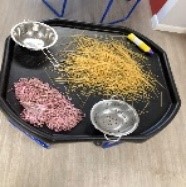
In order to enable our students to recognise these sensations, we use an OT programme focusing on recognising simple differences in texture, temperature and appearance of various items (warm/cold food, wet/dry items, smooth/ rough etc).
2️⃣ Exteroception
Exteroception is the sensitivity to stimuli that originate outside the body. It involves the perception of the external environment through the senses:
- Sight
- Sound
- Touch
- Smell
- Taste
3️⃣ Core Knowledge of Objects
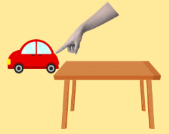
E. Spelke's theory of core knowledge posits that humans are born with a set of innate cognitive systems that form the foundation for more complex knowledge and skills.
One of these systems is the core knowledge of objects. This system includes principles that help individuals understand and interact with the physical world.
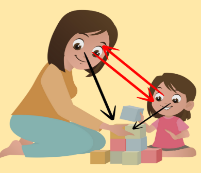
4️⃣ Core Knowledge of People
In E. Spelke's theory, this refers to the innate cognitive systems that help humans understand and interact with other people.
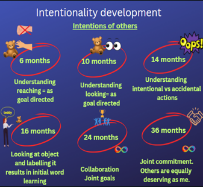
5️⃣ Intentionality
Intentionality refers to the capacity to engage with the psychological states of other people.
This involves understanding and sharing intentions, goals, and plans with others, which is fundamental to cooperative and collaborative activities.

6️⃣ Gestural Communication
Gestural Communication refers to the use of natural gestures, such as pointing and pantomiming, as a fundamental form of human communication.
These gestures are the evolutionary precursors to more complex forms of communication, including spoken language.
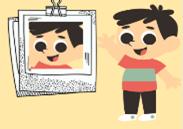
7️⃣ Photo Recognition
Photo recognition emerges in infancy.
Children begin to recognise their mother’s face in photographs first, then they extend this skill to other members of their family.
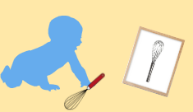
8️⃣ Photo/object Recognition
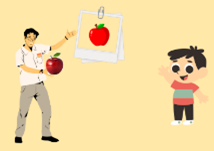
Children learn that pictures can stand for real objects at around two years old. This understanding is crucial for developing more complex cognitive skills later in life.
They can transfer labels learnt from pictures to real objects and vice versa. This indicates that they recognise the referential relationship between the two.
The degree of similarity between the picture and the real object (iconicity) affects how easily children can make this connection. More realistic images make it easier for children to understand the referential relationship.
9️⃣ Iconic Symbol Association
Iconic symbols association refers to the relationship between an iconic symbol and its referent, where the symbol bears a direct resemblance to the object or concept it represents.
The association can be taught by presenting the 3D object at the same time as the picture.
Because of their visual similarity, iconic symbols are often easily and immediately recognisable, making them effective for quick communication.
1️0️ Abstract Symbol Association
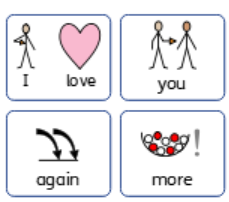
Abstractions refer to the process of removing specific details to focus on more general concepts. This allows us to create terms that can apply to a wide range of situations or objects. For example, the word "vehicle" is an abstraction that encompasses cars, trucks, bicycles, and more.
Abstract symbol association refers to the connection between abstract symbols and the ideas or concepts they represent. Unlike concrete symbols, which have a direct and clear relationship with their referents (e.g., a picture of a tree representing a tree), abstract symbols do not directly depict their referents. Instead, they rely on shapes, forms, colours, and patterns to convey meaning.
1️⃣1️⃣ Level 1 Communication Boards
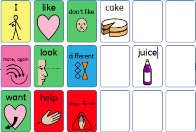
Level 1 communication boards are designed to support basic communication needs using abstract symbols.
These boards typically include a small number of core vocabulary words and essential phrases to help non-verbal or minimally verbal students, who can understand the abstractness of these symbols, to express their needs and interact with others.
Lots of modelling and repetition is required.
1️⃣2️⃣ Level 2 Communication Boards
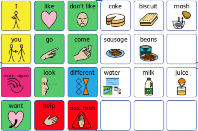
Level 2 communication boards present with an increased number of symbols on a page. They also include core vocabulary plus nouns.
Teachers create communication boards for different topics/activities. For example:
- Snack
- Play with a specific toy such as Mr. Potato Head
- Arts and crafts
- Story time
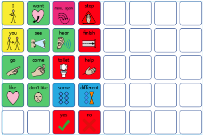
1️⃣3️⃣ Level 3 Communication Boards
Level 3 communication boards have even more core vocabulary and nouns. Adjectives may also appear too.
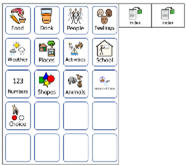
1️⃣4️⃣ Communication books (level1,2,3)
Communication books (level1,2,3) include, on the left-hand side of the book, the core vocabulary as presented on the communication boards. While on the right-hand side, a variety of nous appear.
The book is organised into categories, and each category page is presented with an index tag for easier manipulation.
The communication books are introduced to students after they have mastered the use of the communication boards and have knowledge of categories.
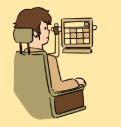
1️⃣5️⃣ Speech Generated Devices (SGD)
SGD are offered to students who can easily use 150 nouns or more and have a good grasp of categories.
Each device comes with different communication apps, depending on the student’s needs.